SYSCOHADA close: how to go from 10 days to 2 days
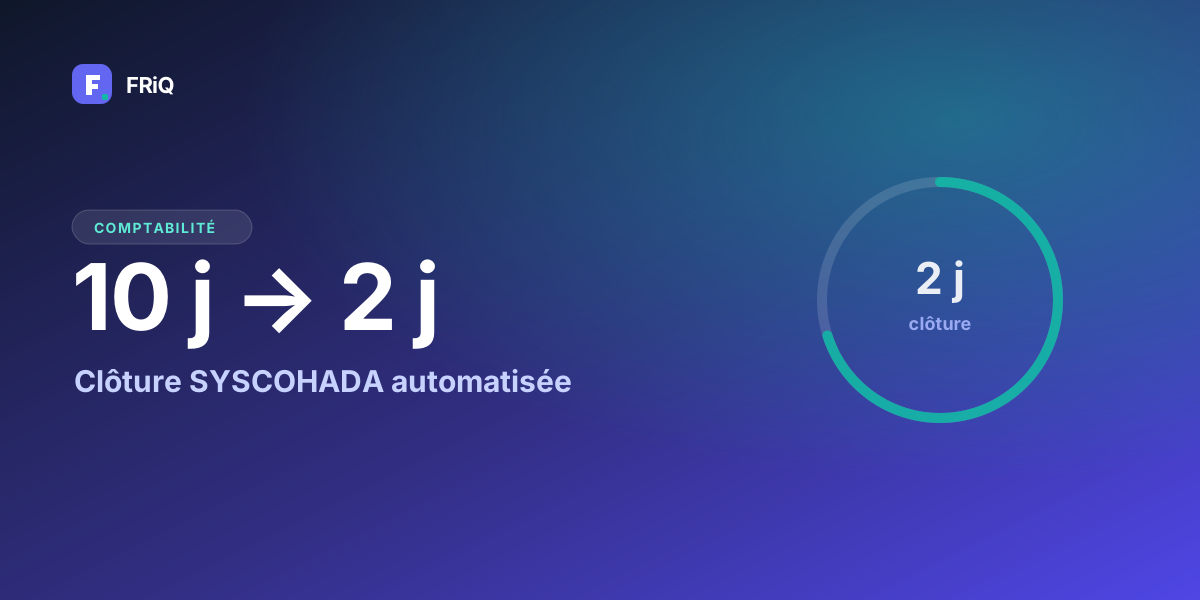
In most SMEs across the CEMAC zone, the monthly close still takes 8 to 10 days. The cause isn't a lack of skill — it's the pile-up of manual tasks: re-keying receipts, chasing documents, reconciling banks by hand, back-and-forth with operations.
Why the close drags on
Three bottlenecks come up every time: receipts arrive late and unsorted, SYSCOHADA coding is done line by line, and matching invoices, purchase orders and statements (bank and Mobile Money) is fully manual.
The 4 levers to reach 2 days
1. Automatic coding
A photo of a receipt is enough: OCR extracts merchant, amount, VAT (19.25% in Cameroon) and date, then the AI suggests the class 6 account and the journal. The accountant validates in one click instead of typing.
2. 3-way reconciliation
Invoices ↔ purchase orders ↔ delivery notes, cross-checked against the bank statement and the Mobile Money statement. Discrepancies surface on their own; you only handle the exceptions.
3. Built-in Mobile Money
Since MTN MoMo and Orange Money are the primary payment method, transactions land directly in the MM journal. No more operator statement to re-type.
4. Validated pre-close
The system prepares the pre-close (journal, general ledger, trial balance); the CFO validates in a few clicks. Anomalies (duplicates, out-of-policy spend) are flagged before validation, not after.
The result
By automating these four steps, an SME moves from a 10-day close to a 2-day close — with OHADA traceability kept for 10 years and a complete audit trail.
FRiQ orchestrates these four levers natively. Explore the Accounting module.